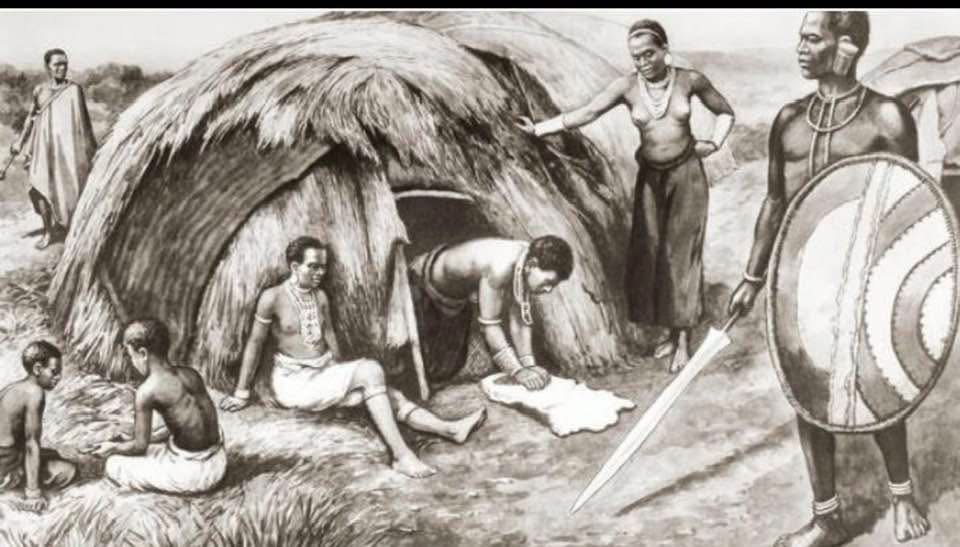
AKAMBA HEROES - NDONYE WA KAUTI
November 20, 2026
The Akamba Prophet Who Challenged British Colonial Rule in 1922
KAMBA HEROES
NDONYE WA KAUTI
AKAMBA CULTURAL CENTER AND MUSEUM | HISTORICAL HERITAGE SERIES
An important chapter in the history of Akamba resistance, spiritual leadership and the struggle against colonial oppression.
Among the historical figures whose stories deserve greater recognition in Akamba history is Ndonye wa Kauti, an Akamba religious leader and prophet who emerged in Kilungu, in the then Machakos District, in 1922.
At a time when British colonial rule was imposing heavy taxes, economic restrictions and administrative controls on African communities, Ndonye wa Kauti emerged with a prophetic message that resonated with the frustrations and hopes of many Akamba people.
His movement was not simply a religious phenomenon. It was also an expression of the social, economic and political discontent that had been building among the Akamba under colonial administration.
His story offers an important insight into how our ancestors used spirituality, collective action and indigenous belief systems to confront an oppressive political order.
The historical circumstances: Ukambani under colonial rule
To understand Ndonye wa Kauti, we must first understand the difficult circumstances in which he emerged.
By the early 1920s, the Akamba were experiencing considerable economic hardship under British colonial administration.
Several developments contributed to the growing dissatisfaction:
* Heavy taxation: The colonial government increased the financial burden on African households.
* Currency changes: The transition from rupee currency to paper florins and subsequently shillings affected local trade and cash transactions.
* Drought and food insecurity: Poor rainfall reduced agricultural production and worsened household poverty.
* Restrictions on economic activity: Quarantine regulations affected the movement and sale of livestock and other produce.
* Forced colonial structures: Traditional systems of authority were increasingly undermined by colonial chiefs and administrators.
The situation was particularly difficult during the economic depression of 1921–1922. Many households struggled to raise money for their taxes, while opportunities for paid employment were limited.
It was against this background that Ndonye wa Kauti’s movement emerged.
The emergence of Ndonye wa Kauti
Ndonye wa Kauti was a prophet who began preaching among the people of Kilungu in the early months of 1922.
He said that Ngai (God) had appeared to him in a dream and appointed him to lead the people into a new era.
His message was revolutionary in the context of colonial Kenya.
He prophesied that:
* The Europeans would eventually leave the land.
* The oppressive taxation system would come to an end.
* The land would regain its former prosperity.
* Rain and plentiful water would return.
* The people would experience a new age of freedom and abundance.
Ndonye had the ability to foretell the coming of rain.
These messages found an audience among people who were experiencing economic hardship, drought and increasing frustration with colonial authority.
Kilumi: The spiritual dimension of his movement
One particularly significant aspect of Ndonye wa Kauti’s movement was its association with Kilumi, the traditional Akamba spiritual dance.
Ndonye invited women to perform Kilumi at his homestead many times.
Kilumi is not simply entertainment. It it is spiritual expression, prayer, healing, communal participation and communication with the spiritual realm.
The prophecy that alarmed the colonial administration
Ndonye’s growing influence attracted the attention of British colonial authorities.
Ndonye was instructed by what he described as divine revelation to construct a sanctuary.
His message that Europeans would be driven out was particularly threatening to the colonial administration.
The movement represented more than religious enthusiasm. It challenged the legitimacy of colonial authority and offered an alternative vision of political and economic freedom.
Arrest, deportation and death in exile
To test Ndonye wa Kauti’s spiritual powers, a colonial administrator visited him in Kilungu during the dry season and challenged him to make rain fall. Ndonye accepted the challenge and called upon the ancestral spirits. According to oral accounts, the skies soon opened, and the rain poured down with such force that the colonial officer’s tent was swept away.
The incident reportedly alarmed the colonial administration, which began plotting to have Ndonye exiled, fearing the influence of his spiritual powers and the possible repercussions from the spirit world. Unwilling to confront him directly, the administration allegedly enlisted the services of some Kamba collaborators to arrest and bind him.
However, as they carried out the arrest, Ndonye pronounced a curse upon those who had betrayed him.( Kiima,Kiweu na Kimena was born)
The colonial administration the then District Commissioner had ordered his arrest before the construction of his sanctuary was completed.
He was subsequently deported to Siyu, on the Kenyan coast.
He never returned to his homeland.
Ndonye died in exile, and his movement collapsed following his removal.
This was a tragic ending for a man whose message had attracted attention during one of the most difficult periods in Akamba colonial
Ndonye wa Kauti and the wider history of African resistance
His story is therefore an important part of the history of early African political consciousness in Kenya.
He should also be remembered as a man who emerged at a time of widespread suffering and offered his community a message of hope, spiritual renewal and freedom.
The AKAMBA CULTURAL CENTER AND MUSEUM wants to find out :-
* What happened to his family and descendants?
* Where exactly was his homestead in Kilungu?
* Are there descendants or families who still preserve accounts of his activities?
* Where was the sanctuary he intended to construct?
* Are there surviving colonial administrative records documenting his arrest and deportation?
* Are there oral traditions about his teachings, dreams and association with Kilumi?
At AKAMBA Cultural Center and Museum, we believe that preserving our heritage requires more than collecting traditional objects.
It also requires recovering the stories of the men and women who shaped our history.
Ndonye wa Kauti represents an important chapter in the relationship between Akamba spirituality, indigenous leadership and resistance to colonial oppression.
We particularly encourage elders from Kilungu and surrounding communities to share family histories, photographs, oral accounts and other information relating to Ndonye wa Kauti.
Such contributions will help establish a more complete historical record for future generations.
Ndonye wa Kauti may not be among the most widely recognised names in Kenya’s nationalist history, but his story reminds us that resistance to colonial rule took many forms.
In 1922, in the hills of Kilungu, an Akamba prophet dared to envision a future without colonial rulers, oppressive taxes and the hardships imposed on his people.
His movement was suppressed, and he died far from home.
But the historical significance of his story remains.
We must recover these stories, preserve them and pass them on to generations yet unborn.
Preserving our culture for posterity.
AKAMBA CULTURAL CENTER AND MUSEUM