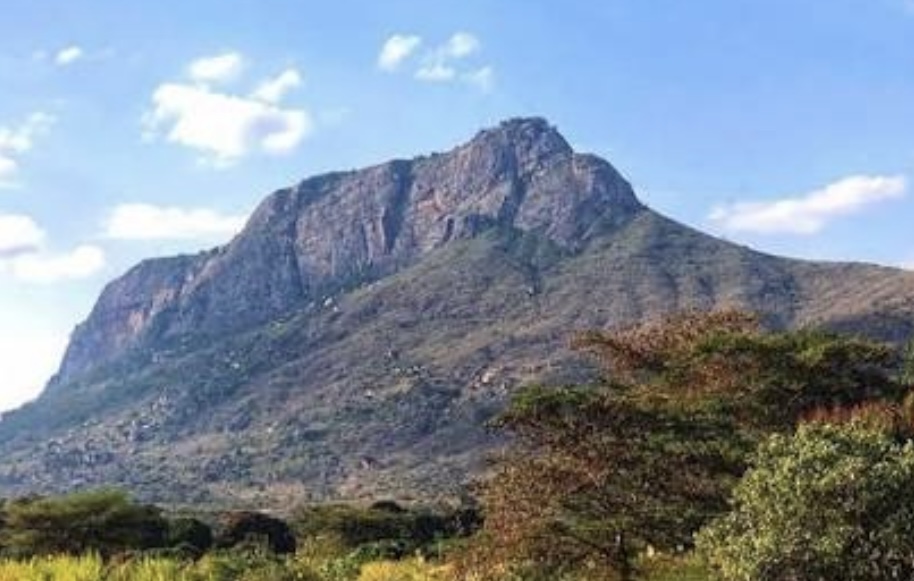
NZAUI HILL GEOLOGY
July 5, 2026
Build by Forces of Nature we chose the name NZAUI EXPENDITIONS LTD
The geological history of Nzaui Hill stretches back more than 550 million years, making it one of the oldest landscapes in Kenya. Unlike the nearby Chyulu Hills, which are relatively young volcanoes, Nzaui Hill is composed of ancient crystalline rocks that formed deep within the Earth’s crust during the assembly of the supercontinent Gondwana.
1. Formation during the Precambrian (about 900–550 million years ago)
Nzaui Hill is part of the Mozambique Belt, a vast belt of metamorphic rocks extending from Ethiopia through Kenya into Mozambique and Madagascar.
During this period:
* Ancient continents collided during the East African Orogeny.
* Immense pressure and temperatures transformed older rocks into gneiss, schist, and granitic gneiss.
* Large bodies of molten granite intruded into these metamorphic rocks and later cooled deep underground.
2. Uplift and mountain building
After the continental collision:
* The crust thickened, producing large mountain ranges.
* Nzaui formed as part of these ancient mountains.
* Over hundreds of millions of years, erosion stripped away many kilometres of overlying rock, exposing the deep crystalline rocks visible today.
3. Long period of erosion (550 million years ago to recent times)
For hundreds of millions of years, wind, rivers, and weather gradually sculpted the landscape.
Because granite and gneiss are very resistant to weathering:
* Nzaui remained standing while surrounding softer rocks eroded away.
* It became an inselberg (an isolated hill rising above surrounding plains).
* Massive rounded rock domes and steep cliffs developed through exfoliation and weathering along natural fractures.
4. Modern landscape
Today the hill reaches approximately 1,830 metres above sea level, making it one of the highest points in Makueni County.
Its geology consists mainly of:
* Granitic gneiss
* Biotite gneiss
* Schist
* Ancient granite intrusions
Thin sandy soils cover much of the bedrock, while fractures in the crystalline rocks allow groundwater to accumulate in some areas despite the generally dry climate.
5. Geological significance
Nzaui Hill is important because it:
* Preserves rocks over half a billion years old.
* Provides evidence of the collision that formed Gondwana.
* Represents one of the best exposures of the Mozambique Belt in southeastern Kenya.
* Contains resistant granite masses and “roof pendants” (remnants of older metamorphic rocks enclosed within granite), features noted by geologists in the region.
6. Relationship to Kamba cultural history
Beyond geology, Nzaui Hill has deep cultural importance. Local Akamba traditions identify it as the place where the first ancestors of the Kamba people descended to Earth, symbolized by footprints preserved in a rock near the summit. While this is a cultural and spiritual tradition rather than a geological explanation, it has made the hill one of the most significant heritage sites in Ukambani.
1. Formation during the Precambrian (about 900–550 million years ago)
Nzaui Hill is part of the Mozambique Belt, a vast belt of metamorphic rocks extending from Ethiopia through Kenya into Mozambique and Madagascar.
During this period:
* Ancient continents collided during the East African Orogeny.
* Immense pressure and temperatures transformed older rocks into gneiss, schist, and granitic gneiss.
* Large bodies of molten granite intruded into these metamorphic rocks and later cooled deep underground.
2. Uplift and mountain building
After the continental collision:
* The crust thickened, producing large mountain ranges.
* Nzaui formed as part of these ancient mountains.
* Over hundreds of millions of years, erosion stripped away many kilometres of overlying rock, exposing the deep crystalline rocks visible today.
3. Long period of erosion (550 million years ago to recent times)
For hundreds of millions of years, wind, rivers, and weather gradually sculpted the landscape.
Because granite and gneiss are very resistant to weathering:
* Nzaui remained standing while surrounding softer rocks eroded away.
* It became an inselberg (an isolated hill rising above surrounding plains).
* Massive rounded rock domes and steep cliffs developed through exfoliation and weathering along natural fractures.
4. Modern landscape
Today the hill reaches approximately 1,830 metres above sea level, making it one of the highest points in Makueni County.
Its geology consists mainly of:
* Granitic gneiss
* Biotite gneiss
* Schist
* Ancient granite intrusions
Thin sandy soils cover much of the bedrock, while fractures in the crystalline rocks allow groundwater to accumulate in some areas despite the generally dry climate.
5. Geological significance
Nzaui Hill is important because it:
* Preserves rocks over half a billion years old.
* Provides evidence of the collision that formed Gondwana.
* Represents one of the best exposures of the Mozambique Belt in southeastern Kenya.
* Contains resistant granite masses and “roof pendants” (remnants of older metamorphic rocks enclosed within granite), features noted by geologists in the region.
6. Relationship to Kamba cultural history
Beyond geology, Nzaui Hill has deep cultural importance. Local Akamba traditions identify it as the place where the first ancestors of the Kamba people descended to Earth, symbolized by footprints preserved in a rock near the summit. While this is a cultural and spiritual tradition rather than a geological explanation, it has made the hill one of the most significant heritage sites in Ukambani.